I just like the name Moo Juicers.

The Definitive Location

David Shanske
My day job is in training for an airline. I also develop Indieweb WordPress plugins so that others can take control of their online identity.
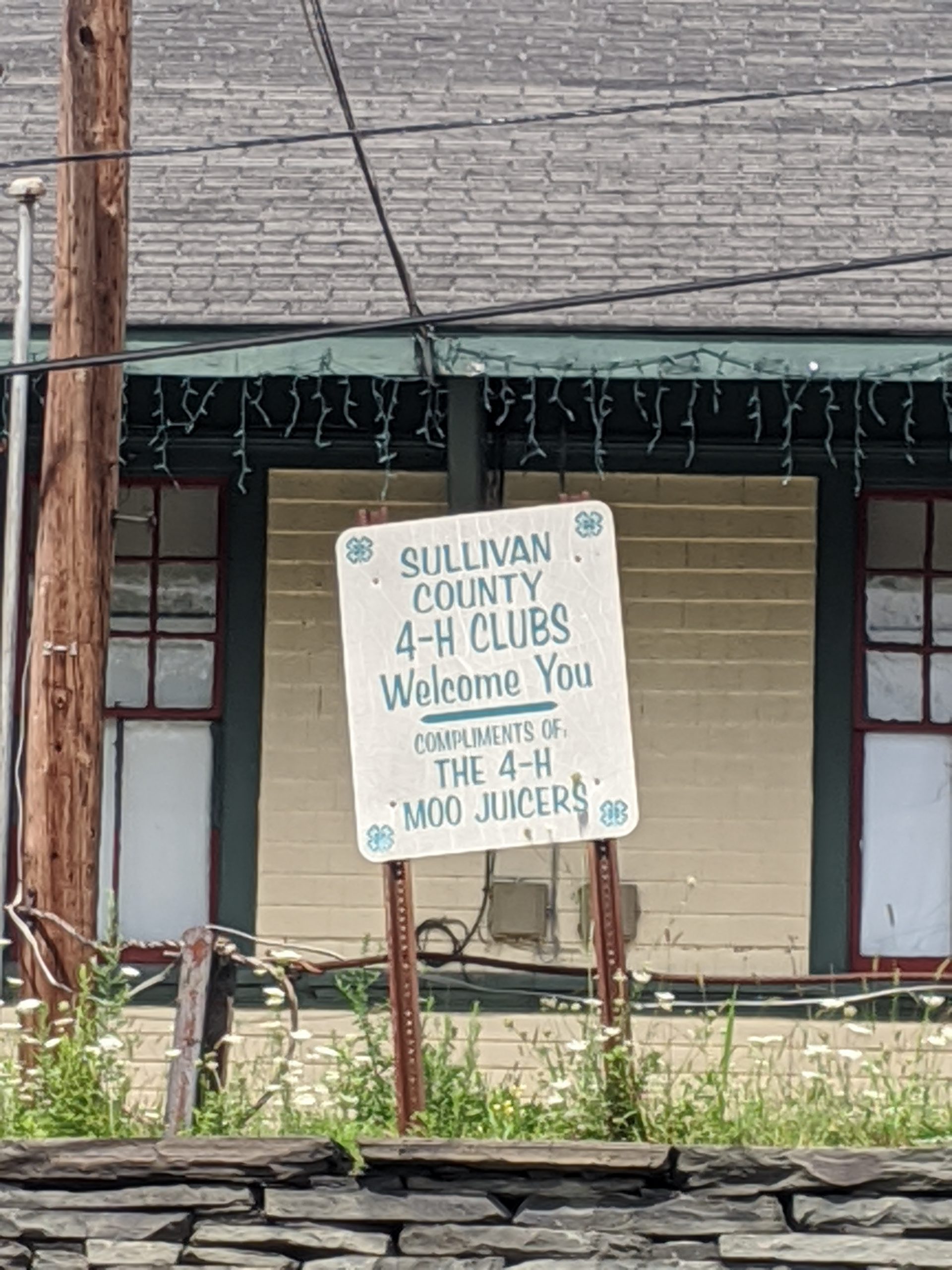
I just like the name Moo Juicers.
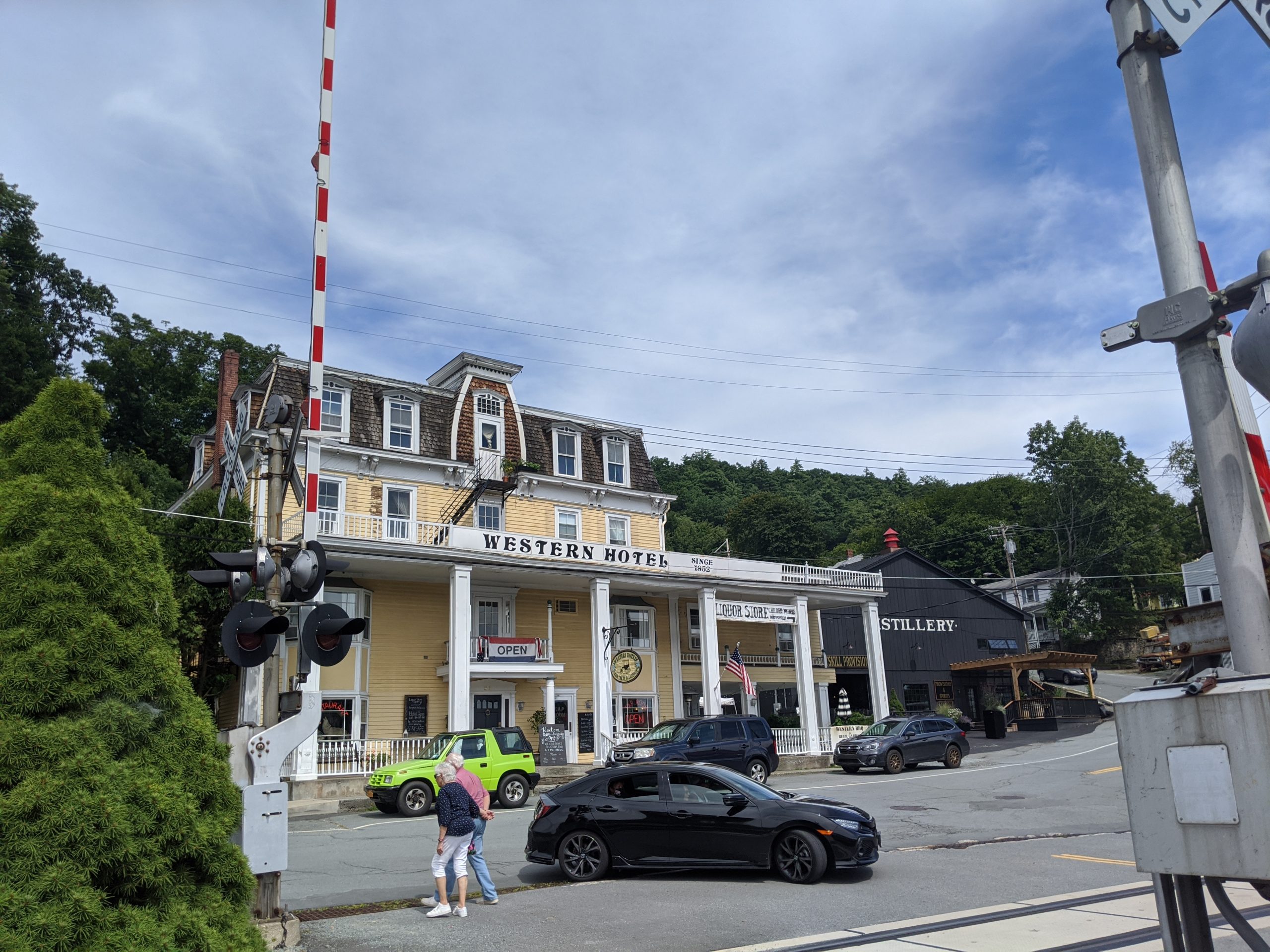
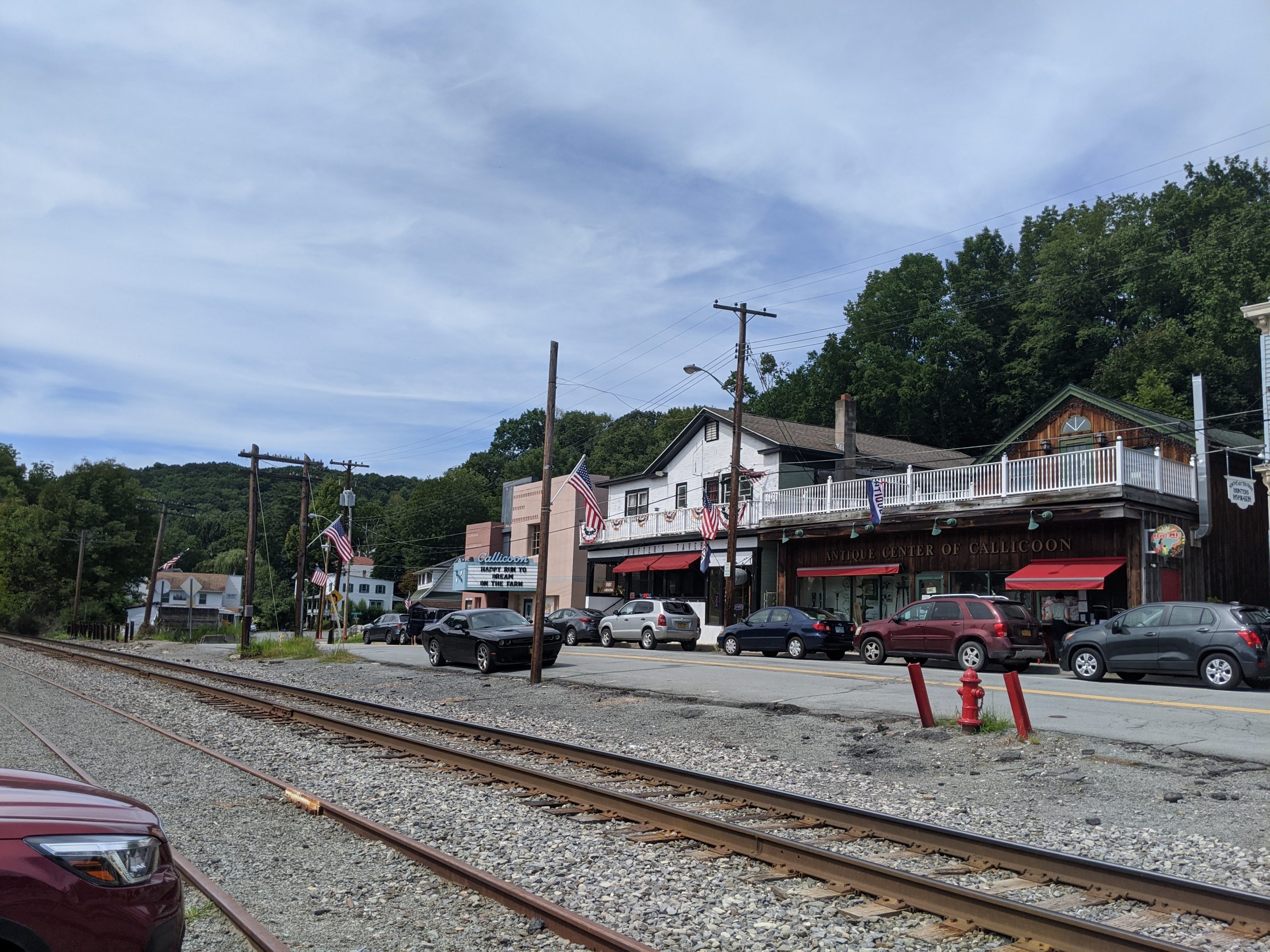
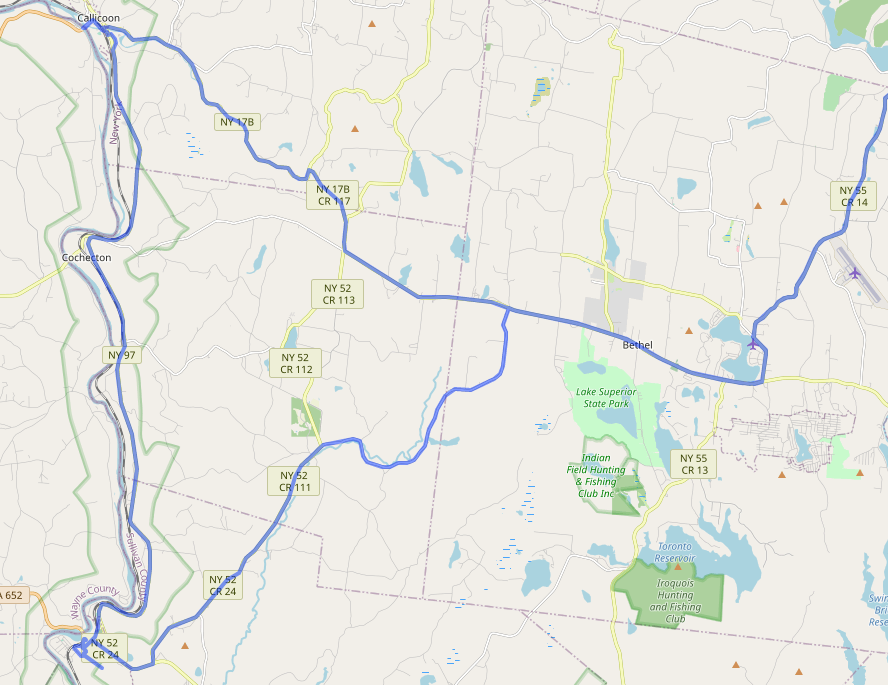 Took a drive on Friday down to Callicoon, New York, walked around a bit, then down the Delaware to Narrowsburg, and back up in a loop to head back through Bethel, site of the Woodstock Festival. Eventually I’ll be able to display this trip using my own mapping system, instead of this screenshot.
I’ve never watched the conventions before, but was curious how the two parties would handle a virtual one. I’ve been watching the DNC. It is rather surreal..enjoyed the backdrops of all the delegates.
Constructed by the city-owned Independent Subway System (IND), the A train, known then as the 8th Avenue System, opened in 1932 as a 12-mile subway line running from 207th Street in Upper Manhattan to Chambers St in Lower Manhattan. By the 1950s, the line had grown to be the longest line in the New York City subway system, running 31 miles across three boroughs and traversing diverse communities along the way. It is also known for having been immortalized in Billy Strayhorn’s song ‘Take the A Train’, a song which has become a celebration of the subway itself.
Join Museum Educator Kate Lanceley for a digital discussion that will explore the history of the A train line. Discover unique features of the line and the history of its construction, including the individuals who helped build it and stories about some of the communities it serves.
A long time fan of Cousin Brucie as a lover of oldies and a New Yorker. Glad to see he’s going to be on local radio.
I’ve found URLs where the top level has two items…one of which is an h-card, the other an h-entry. There are two questions that come from this for the specification.
First, if there is no author property on the h-entry(it could be a different h- element), can I assume that a top-level h-card also reflects the page author?
Second, if there is an author property that is a URL, is there a point in checking to see if there is a more complete top-level h-card with the same URL on the page? It seems this is also a practice that people do.
One of the problems in consuming microformats is consistency. There are a variety of different ways people structure their pages.
Many people have written code to solve this problem. I do it in my library, Parse This. Aaron Parecki does it in his XRay library. The Microsub specification has a stricter jf2 output in order to simplify the client having to make all sorts of checks.
This is the point. It is easier to consume a clean and consistent parsed microformats structure. Some of this would probably be solved by some consensus on the matter.
So, what does Parse This, and its ilk do? I lack a name for this sort of code.
Been trying to fix automatically syndicating to other sites from my site. It looks like my site only checks to syndicate every quarter hour. Too many moving parts.
Tornado watch here till 10pm… tornadoes don’t seem like a New York thing.
Syndication Links for WordPress 4.2.4 is out. It tries for a few fixes to the scheduling of syndications, refreshes the icons, and introduces one new feature. A custom query. /?syndication=twitter.com or such. It tries to return all posts that have a matching syndication link and can be added to any archive page.
Micropub 2.2.0 has one major change in it. IndieAuth client code was removed. This code now lives in the IndieAuth plugin. This means that Micropub does not check for scopes. It uses the built-in WordPress capability system to determine if an action should be performed.
The IndieAuth plugin limits capabilities based on scope as of Version 3.5.0, so the capability checks will work perfectly.
On a practical note, this allows the code to be simpler on the Micropub side. The scope limiting code is unit tested now inside the IndieAuth plugin and will continue to be iterated on there.
This allows Micropub to focus on the publishing side of things. Also, there was a request to remove a dependency on IndieAuth.com as the default for the built-in code. The IndieAuth plugin has no external site dependencies by default.
Earlier in the week, I noted the release of IndieAuth 3.5.0, but I didn’t explain the major under the hood changes that occurred here in a post, which I need to do as at least one person is experiencing issues(probably necessitating a 3.5.1 as soon as I figure out why.)
I also noted I forgot to describe this clearly in the readme, if people read changelogs and will have to correct that as well. I wrote some of this code in January and it was merged, but didn’t release it till July, so…
IndieAuth 3.5.0 implements scope support. Previously, scopes were handled by the Micropub plugin. It would check what scopes you had and implement accordingly. But WordPress does not have the concept of scopes. It has the concept of capabilities. And users have roles, which are collections of capabilities.
So Indieauth 3.5.0 implements scopes also as collections of capabilities. If you are doing a capability check in WordPress, and the request was authenticated with an IndieAuth token specifically, it will filter your capabilities by the ones defined in the scopes the token has.
That means if your user didn’t have the capability to begin with, you can’t use it. In a future version, I’ve considered on the authorization screen, not even issuing a token with that scope, but this is ultimately more secure than before.
It means that plugins don’t have to understand scope at all. They just have to enforce and support native WordPress capabilities, which they should anyway.
For now, the system only supports built-in capabilities, but there is nothing that says it cannot move to custom capabilities as needed, as everything is filterable and we accept pull requests.
The second big change I did mention in the changelog brings the code to support using a remote IndieAuth endpoint back into this code. However, it is disabled by default. This is based on the code removed from Micropub, which had a parallel IndieAuth class that was only used when the IndieAuth plugin was not enabled. By having it here, it allows anyone who wants to use it to enable it, but simplifies the experience for the bulk of users. It also allows it to be enhanced by any of the scope or other enhancements put into the main plugin.
The plugin also simplifies the site checks to ensure that your site will work with the plugin, putting them into the Site Health checks where they logically belong. This includes an SSL check and a Authorization header check.